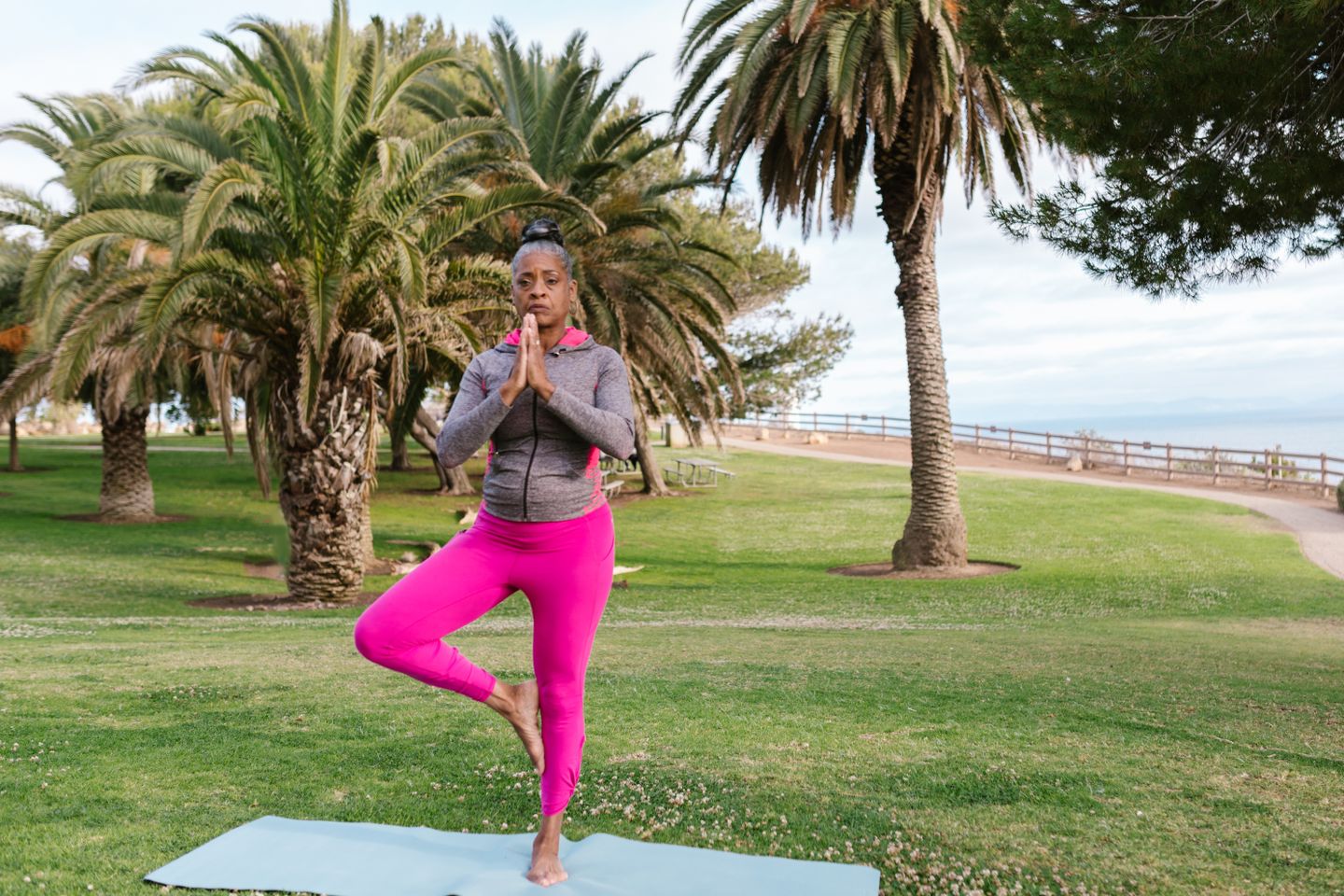
Inspect the surface first
Look at the ground before unrolling a mat. Grass can hide holes, stones, and damp patches, while paving may have loose edges. Choose an even area you can see clearly and reach without an awkward climb.
Walk across the proposed space in your usual footwear. Notice whether the surface shifts or slopes. If you cannot find a dependable area, use a stable outdoor chair or return indoors rather than adapting movements to uncertain footing.
Check the space around you
Allow enough room to move your arms without reaching into plants, furniture, or a passing route. Look above as well as beside you. A low branch or awning can matter even when the floor area seems generous.
Keep shared pathways open. A quiet corner may still be used by other people, animals, or maintenance workers. Choose a spot where you can pause and relocate easily, without relying on everyone else to work around your session.
Choose useful support
A fixed railing or firmly placed chair may provide light support for familiar standing movements. Check stability before using it, and avoid leaning on lightweight garden furniture. A decorative object is not automatically a dependable support.
Keep movements modest while you get acquainted with the setting. Standing comfortably with both feet grounded can be the whole practice. You do not need to lift a foot or test your balance simply because you are outside.
Keep the plan adaptable
Recheck the surface if conditions change. A few drops of rain can alter traction, and moving shade can change what you see. Stop before relocating your mat so you can give the surroundings your full attention.
Choose an indoor alternative in advance, such as a short seated practice. Switching locations preserves the purpose of the session without requiring the original plan to work. Put equipment away and leave the outdoor area as clear as you found it.
A few common questions
Is grass always softer and better?
No. It may be uneven, damp, or conceal obstacles. Assess the actual surface rather than assuming a material will suit your practice.
Can I practice without a mat?
For some familiar standing or seated activities, yes. Consider traction, footwear, and the surface; a mat does not make unsuitable ground dependable.
Published by the Lindeira journal.